
What 3D & AR actually do for the consumer, and for your P&L.
An explainer for brands, retailers and distributors. It walks through the six dimensions on which interactive 3D and AR change the consumer’s pre-purchase experience in baby and juvenile gear, and translates each one into the commercial consequence for your business.
- B2B explainer
- Six consumer dimensions
- P&L implications
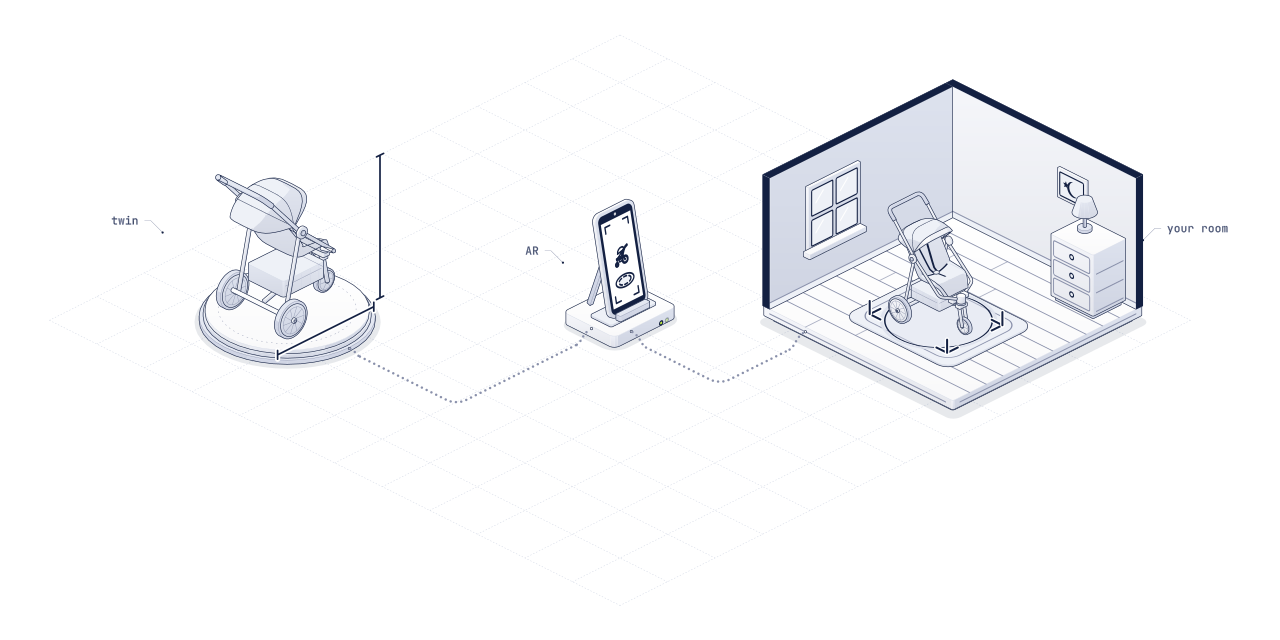
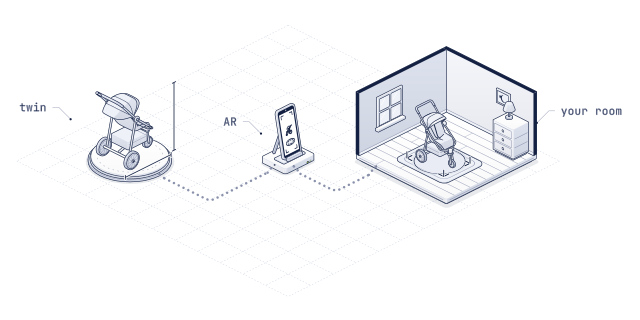
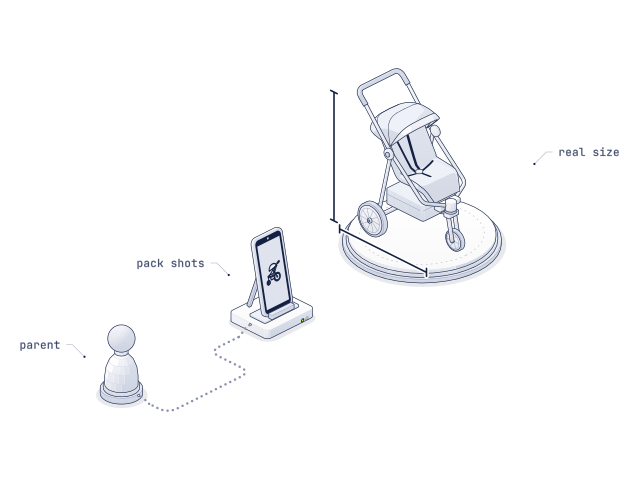
A high-consideration purchase, sold from static pack shots.
Baby gear is a textbook high-consideration category, researched for weeks, mostly on a phone, often by first-time parents with a deadline. A gallery of stills leaves the questions that decide the purchase unanswered, and the answers arrive with the delivery, or with the return.
Researched for weeks
Strollers, car seats and nursery furniture are among the most researched purchases a family makes. Better visualisation feeds straight into the decision.
Understood before bought
Parents want to understand harness systems, ISOFIX compatibility and recline positions before they buy. Stills explain them poorly.
Will it fit?
A stroller too wide for the front door is a daily annoyance for two years. Fit is a real concern, not a detail.
Bulky and expensive
Sending baby gear back costs the refund, the logistics and the environmental impact of shipping bulky items twice.
The questions that decide the purchase stay unanswered.
Weeks of research, mostly on a phone, from a gallery of stills: does it fit the hallway, the boot, the doorframe? The answer arrives with the delivery, or with the return.
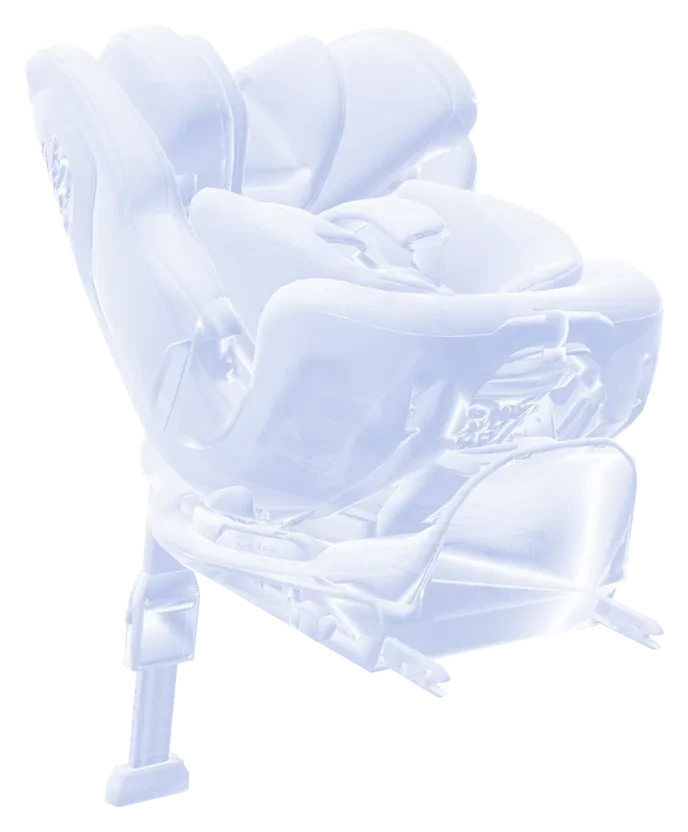
Try it the way a parent would.
This is the experience on the product page. Turn the car seat, zoom into the details, and on a phone place it at real size in the car or the hallway, with no app to install.
Every effect on the rest of this page starts here: a parent who has seen the product from every side, at the size it will arrive.
Six things interactive 3D & AR change for the consumer, and what each does for the business.
The consumer benefit is more than a prettier product page. Each dimension below pairs what changes for the parent with the operational outcome it produces on the brand or retailer side.
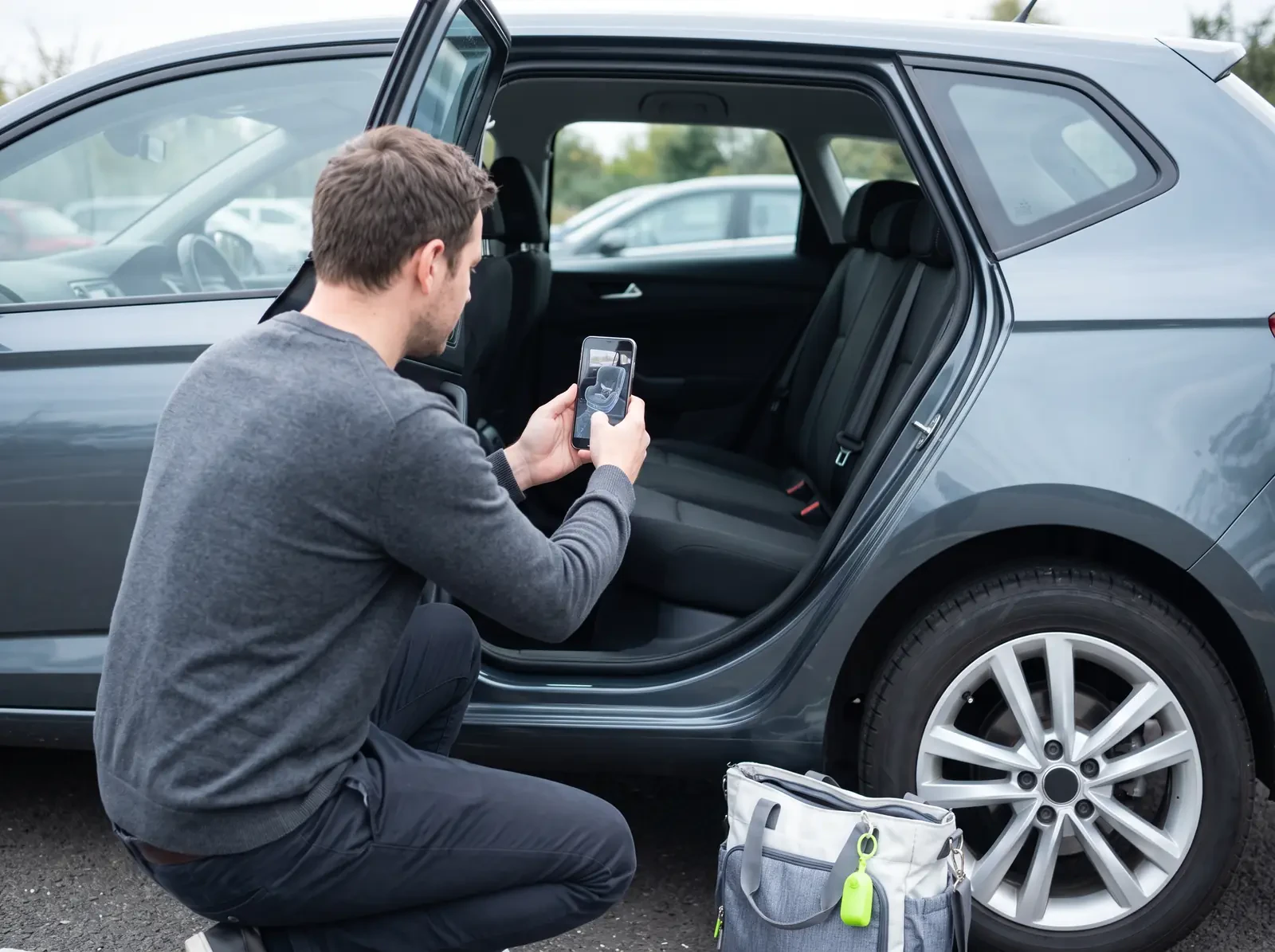
Does it fit the back seat? Answered before checkout.
The car seat placed on the real back seat, at real size, from the product page. The question that used to be answered by the delivery, or by the return, is settled on the phone.
- 01 · Spatial confidence
“Will it actually fit through my front door?”
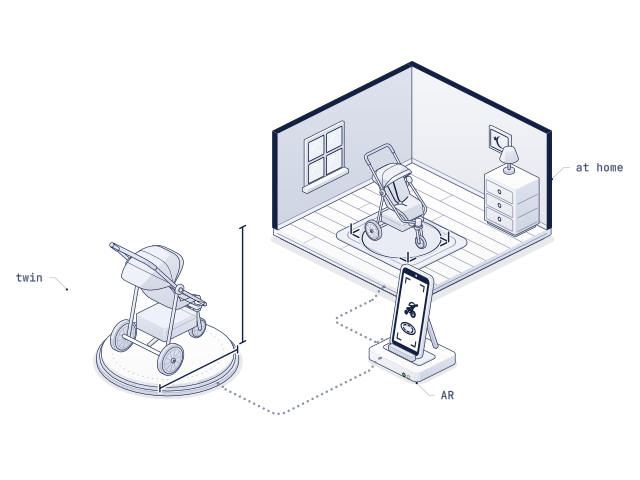
Strollers, infant carriers, ISOFIX bases and nursery furniture all fail at home if the dimensions were guessed wrong. AR places the real geometry in the consumer’s own flat at 1:1 scale, before they buy. With the nursery configurator, parents see how their future nursery will look, and choose its furniture with confidence.
For the business: fewer “didn’t fit” and “didn’t look right” returns, the bulky and expensive kind, cut at source. - 02 · Variant clarity
“Which colour, which configuration, which fabric?”
Baby-gear ranges run to many colourways and several seat-unit and chassis combinations, and static thumbnails lose the consumer fast. The configurator lets them try every option side by side, in 3D.
For the business: higher order value through accessory and variant cross-sell, fewer “wrong colour” returns, and real demand data per colourway. - 03 · Mechanism literacy
“How does it fold? How does the seat unit click on?”
Fold, recline, the carrier lock, harness routing: mechanisms are the heart of the category, and photography hides them. Hotspots in 3D let the consumer rotate, tap and watch the mechanism explain itself.
For the business: confidence in the mechanism that decides the purchase, fewer support tickets after delivery and fewer “doesn’t work as expected” returns. - 04 · Safety literacy
“i-Size, R129, ISOFIX: what does any of it mean for me?”
Car-seat and stroller safety systems come with a heavy regulatory vocabulary. Hotspots turn it into geometry a parent can see: carrier fit, base anchorage, recline angle, harness path.
For the business: a better-informed decision in the highest-stakes category, less anxiety, and more confidence to step up to the higher-spec model. - 05 · Social validation
“Send this to my partner, my parents, our designer.”
A baby-gear purchase is rarely a solo decision. Shareable 3D and AR links let the consumer get a second opinion without anyone redoing the research.
For the business: faster decisions and fewer baskets abandoned at “I need to check with my partner”. The same lever as wishlist sharing, anchored on the actual product. - 06 · Pre-purchase rehearsal
“I can already picture it in our flat.”
3D and AR let the consumer build a mental model of the product before it arrives. Owning it in imagination first makes the decision easier and the delivery less of a surprise.
For the business: higher conversion on the PDP, longer dwell time and fewer buyer’s-remorse returns.
Four lines on the brand or retailer P&L.
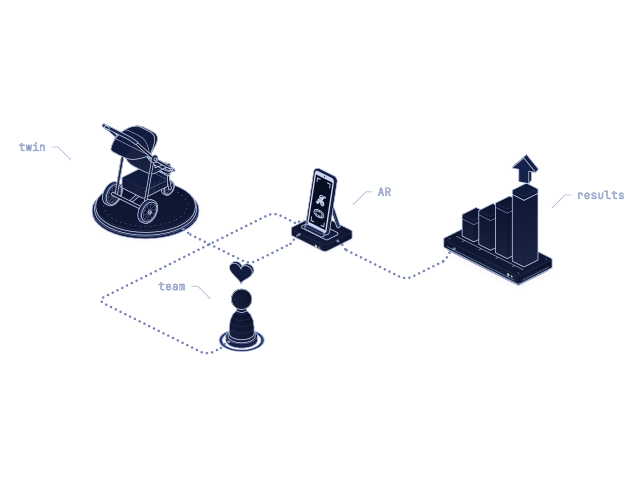
The six dimensions don’t stay in a marketing report. They land on four lines that brands and retailers already track. Catalogue reports the engagement behind them (views, configurations, AR sessions, clicks to the buy button) per market, per retailer and per variant, ready to join with your shop analytics.
Higher conversion
Spatial confidence, mechanism literacy and pre-purchase rehearsal add up on the PDP. The consumer reaches the decision earlier, and reaches it with confidence.
Fewer returns
“Didn’t fit”, “didn’t look right” and “doesn’t work as expected” are return reasons that AR and hotspot-driven 3D address before the order is placed.
Higher order value
Variant clarity and Collection View turn a single-SKU PDP into a system PDP. Infant carriers, accessories and matching variants join the basket without extra ad spend.
Better attribution
See which retailers, markets and colourways drive engagement and configuration. Trade-marketing spend stops being allocated on instinct.
- Fewer returns in comparable categories
- up to ~22%
- Driven by better pre-purchase understanding; the effect is strongest where colour or size surprises are common
- Conversion lift on product pages with interactive 3D & AR
- 40–200%
- Industry data from furniture and homeware platforms
Directional figures from comparable categories, not ARkid data. They vary by product, category and baseline; the walk-through models them against your assortment, channel mix and basket size.
A new category of perception, not a richer image format.
Static pack shots belong to the brochure-and-catalogue era. In interactive 3D and AR the consumer experiences the product in context, under their own conditions, before the purchase. That changes the brand’s relationship with the buyer.
From an image of the product to the product, situated.
The parent who placed the stroller in their hallway in AR already owns it in imagination. The parent who watched the harness route itself in a hotspot already trusts the safety story. The brand has moved from advertising into experience, without an app download, in the consumer’s own room.
- The product in the buyer’s room, not in a studio
- Mechanism and safety experienced, not described
- 2D imagery you can trust, rendered from the real product model
Brands that show up modern get treated modern.
The category baseline has moved. Furniture and homeware made interactive 3D and AR on the product page mainstream, and baby gear works the same way: high consideration, spatial fit, long decision cycles. Parents bring that expectation with them.
Innovation is brand equity.
Working with category-leading visualisation is a brand asset in itself, beyond any single launch. Brands that meet the consumer’s expectation take on perceived modernity and category leadership; brands that don’t get measured against the ones that do.
- Stand out from competitors still relying on static pack shots
- Close the perception gap to adjacent premium categories
- Set the category standard rather than chase it
Signed off once. Current everywhere.
Let’s model the consumer effects against your assortment.
Half an hour, screen-shared. We walk the six dimensions on a concrete product from your range, then map each one to the line on the P&L where it shows up.