
Innovation, without the headaches.
One 3D & AR layer for every brand you carry. One line of HTML on the PDP, plugins for Shopify, Magento, WooCommerce, Shopware and BigCommerce, and support, training and asset updates handled on our side. Stand out from the shop next door without running a development project on the side.
- Plug and play across every brand
- Any shop system, or headless
- EU-hosted (Germany)
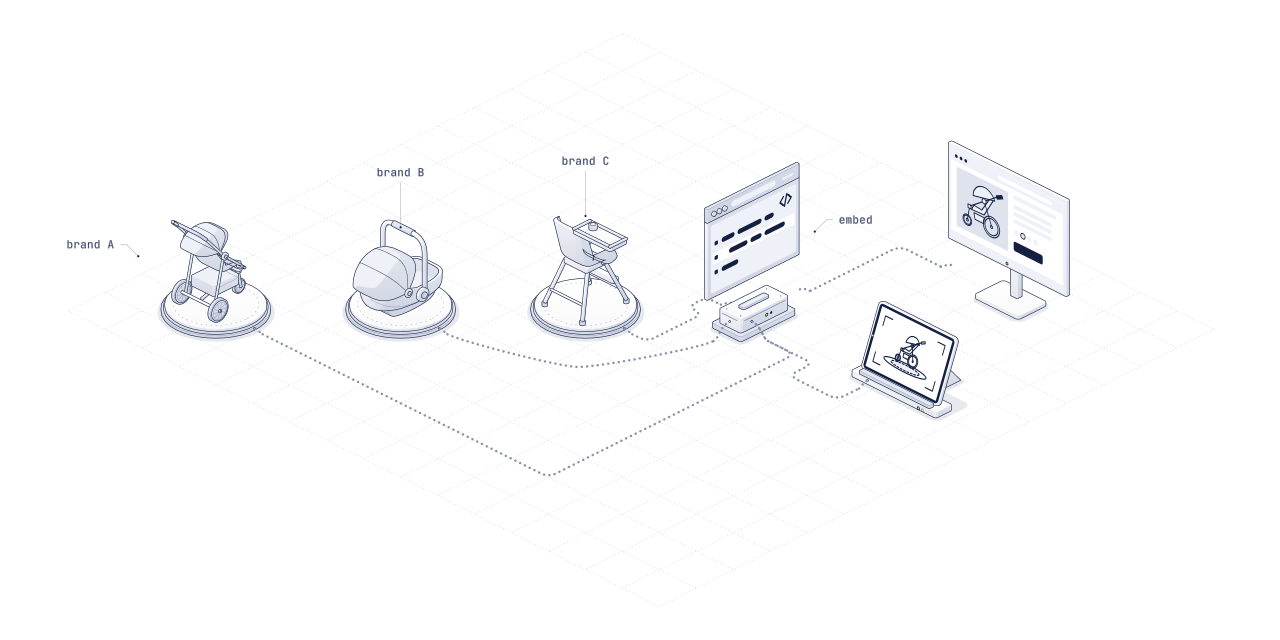
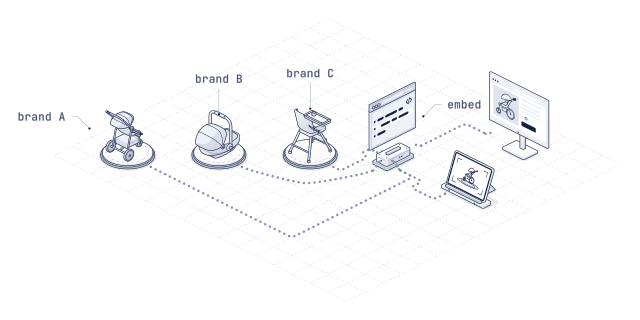
Modern visualisation is now expected, not optional.
Parents shopping for baby gear arrive with expectations shaped by every other premium category they buy. Static pack shots feel dated; interactive 3D and AR feel like the standard.
A different viewer, SDK and integration for every brand.
The retailer’s job is to meet that standard across every brand on the shelf. Today, every brand wants its own viewer, its own SDK and its own integration, and none of them was built around your shop.
Per brand, it adds up: one or two hero brands in 3D while the rest fall back to gallery images, a different look on every product page, and the support for every integration landing on your team. Meeting the standard should not mean running a development programme.
- More sales
- +17%
- Products people understand before delivery are products they buy
- Longer on the product page
- +35 s
- When shoppers rotate, configure and place the product in their room
- Higher add-to-cart ratio
- +38%
- Fewer open questions between the product page and the basket
ARkid data: product pages with interactive 3D & AR compared with static pack shots only, from A/B tests with brands and retailers and ARkid’s internal statistics. Time: average extra seconds when shoppers use the viewer.
When 3D & AR stop being a per-brand project.
When two retailers carry the same brand, the one with the richer product experience wins the consideration. The difference between a custom viewer for one hero brand and one 3D & AR layer across the assortment is measured in your team’s load, not in pixels.
| Topic | Per-brand integration | In-house build | ARkid |
|---|---|---|---|
| Coverage across the assortment | One or two hero brands; the rest fall back to gallery images | Whatever the team has time to model, usually a fraction of the SKUs | Every authorised brand in the network, through one integration |
| Integration effort | One per brand, each with its own SDK, ticketing and release cycle | Months of development, then ongoing maintenance | One line of HTML, or a plugin for your shop system |
| Asset updates & new variants | Wait for the brand to email a new file, then re-test the integration | Re-model in-house, then re-deploy | Automatic: the brand publishes a new version and every embed updates |
| Visual consistency across brands | Each brand looks different on your PDP: five brands, five viewers | Consistent with discipline; fragile under staff turnover | One viewer themed to your shop, every brand inside it |
| Support & training | Your team handles it, separately for every brand integration | Your team handles it for the in-house tool | Handled by ARkid, for your team and for the brand assets (onboarding on selected plans) |
| Engagement analytics | Per-brand dashboards, no view across the assortment | Whatever you instrument yourself | One view across every brand, product and embed |
| Cost over time | Grows with every brand you integrate | Build cost up front, running costs for good | A fixed monthly plan that scales with views |
One viewer. Every brand. Native to your shop.
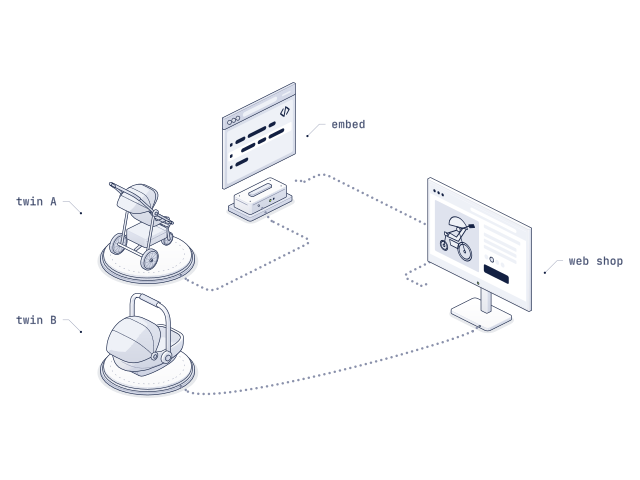
ARkid replaces the per-brand viewers with a single embed that carries every authorised brand on your shelf, branded to match your shop, not the brand.
A viewer that matches your design system, not the manufacturer’s.
The 3D and AR experience on your PDP looks like your shop: your typography, your colours, your interaction patterns. The brand-signed model behind it is identical across the network; the framing around it is yours.
Shoppers rotate and configure the product, open the feature hotspots and place it in their own room in AR, with no app to install.
- Shop-themed viewer: typography, colours, hotspot styling
- The same embed for every authorised brand on your shelf
- Linked to your own PDP and its buy button
- Product truth controlled by the brand, presentation by you
Native to the stacks you already run.
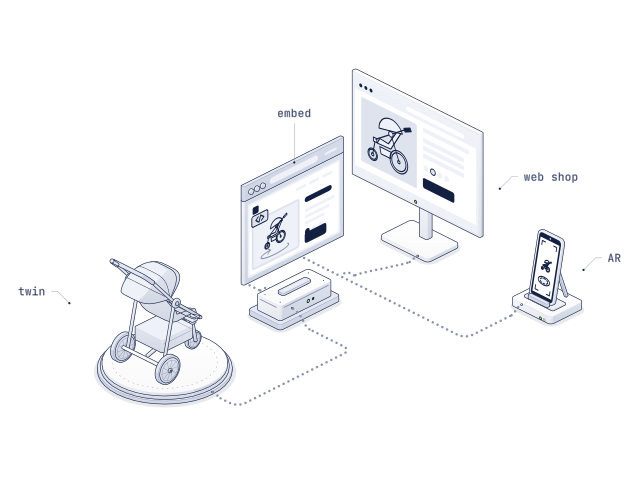
ARkid sits alongside your e-commerce infrastructure, not in place of it. It lives where your e-commerce team already works, and the brand’s PIM stays the source of truth for product data.
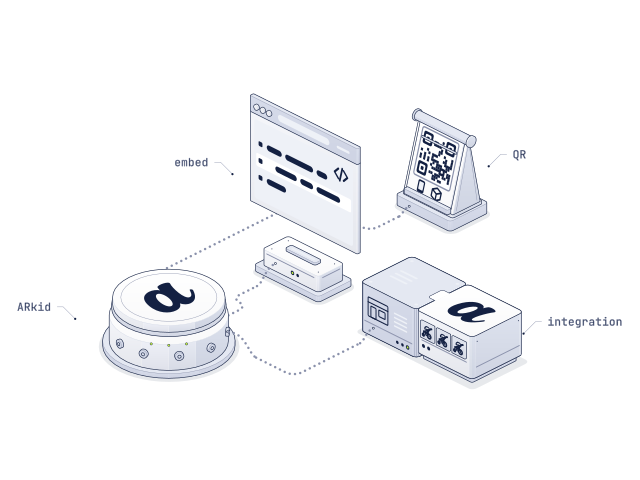
HTML or a plugin, whichever your stack prefers.
On Shopify, Magento, WooCommerce, Shopware or BigCommerce, install the plugin, map the products and you’re live. On a headless storefront or a custom CMS, the one-line embed goes into the PDP template. Either way, the same 3D and AR experience renders for every authorised brand.
- Shopify
- Magento
- WooCommerce
- Shopware
- BigCommerce
- An iframe or API call for any other stack
- CMS-neutral: WordPress, TYPO3, Contentful, Storyblok, Sanity, headless
- No SDK to ship; the viewer loads when the shopper interacts
- SKU metadata flows in from the brand’s PIM
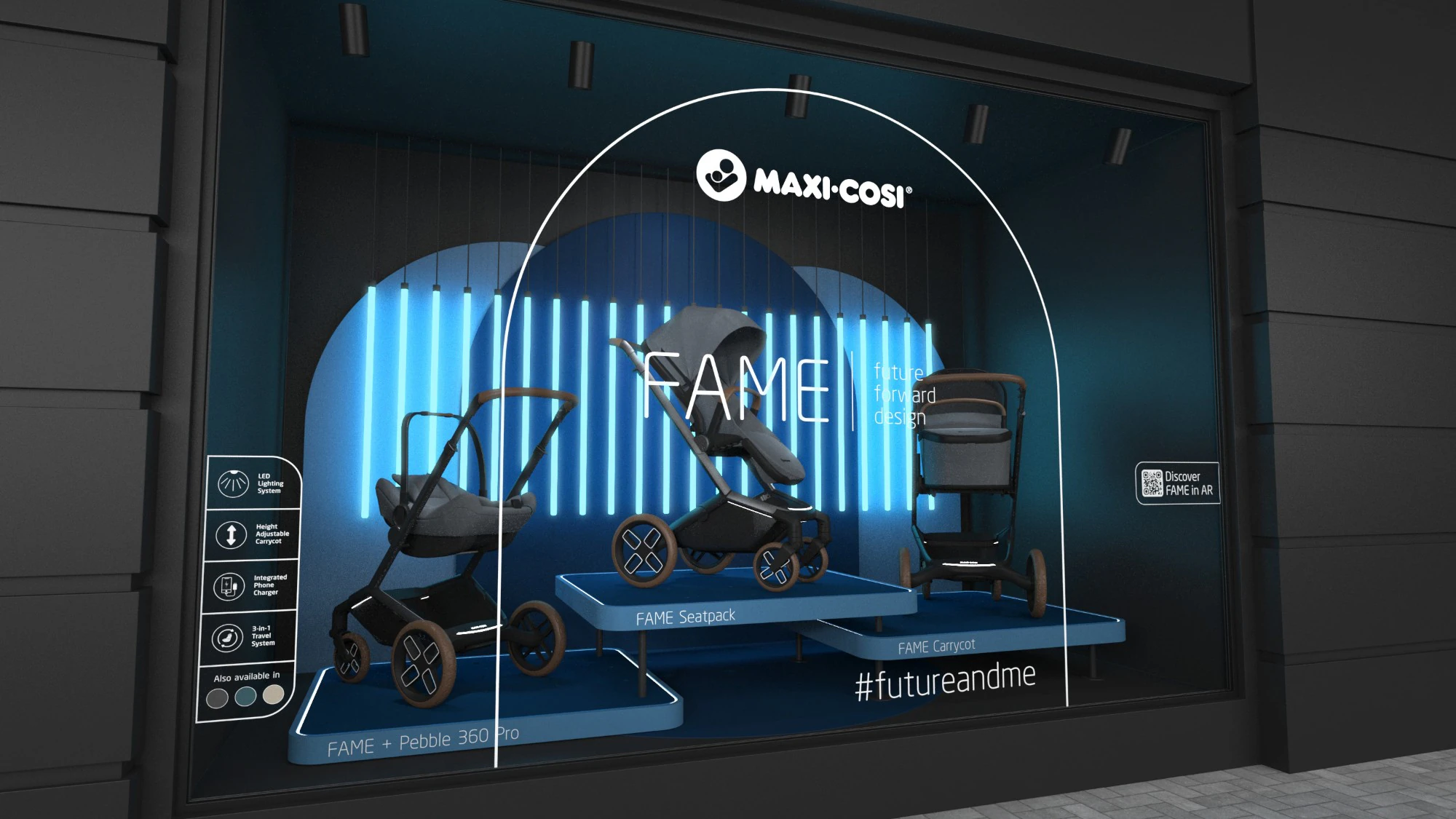
- QR mode for print, shelf talkers and trade-fair booths
The innovation lives on our side. The differentiation lives on yours.
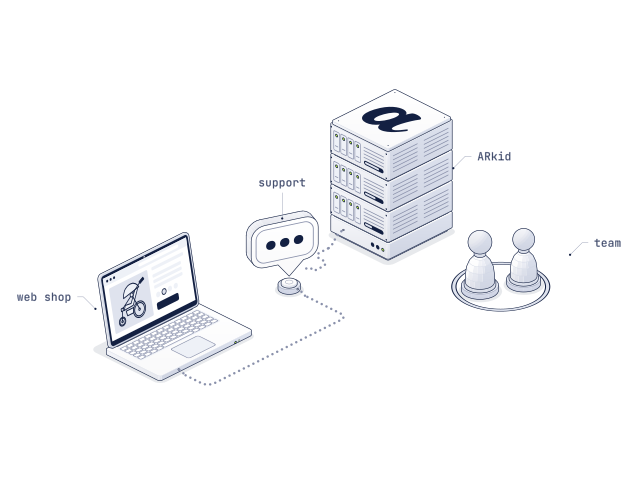
Adopting ARkid does not mean building a new internal capability. Hosting, support, training, updates and governance sit with us, by design.
Your team doesn’t take embed tickets.
When a brand updates a model, when a new variant ships, when a viewer behaves oddly on a particular browser: that ticket comes to ARkid, not to your e-commerce desk. Your team works on the shop, not on the technology behind it.
- Support: embed and viewer questions come to us
- Training: onboarding for e-commerce, marketing and floor teams on selected plans, and new staff train on the same 3D models customers see
- Updates: a new brand model reaches every embed automatically, with no re-deploy or re-test on your side
EU-hosted, in Germany
GDPR-native, with a standard data processing agreement.
99.00% contractual floor
Response times and uptime guarantees above the floor scale with the plan.
A single point of contact
support@arkid.app and phone, Mon–Thu 09:00–17:00, Fri 09:00–15:00 (CET/CEST).
- Governance
Role-based access
Separate roles for your admins and support users.
The same asset on every retail surface.
The same 3D and AR layer powers the PDP, the floor sales tablet, the in-store touchscreen and the trade-fair booth: one asset, consistent branding, and the same analytics behind it.
- Online
PDP & configurator
3D viewer, WebAR, Collection View and configurator on the product detail page, branded to your shop.
- Floor sales
Sales View on tablet
A tablet interface built for the assisted sale: quick product search, fast colour swaps, and one tap to hand the AR view to the customer’s phone by QR code.
- In store
Touchscreens
The infinite aisle on the shop floor. Every variant can be explored on a touchscreen, even when the physical SKU is not on display.
- In store
Digital signage
360° turntables, lifestyle loops and brand campaigns pushed to the screens you already have, controlled centrally from Catalogue.
- Print
QR for print & shelf
Catalogues, leaflets and shelf talkers gain an AR action. Scan, see the product in your hallway, decide.
- Events
Trade fairs & brand corners
The same model on the booth screen as on the PDP. Plan the shop-in-shop or the trade-fair stand in the ARkid Rooms Configurator before you build it; brands share their POS configurations with you as a link.
From retailers already working with ARkid.
Two German specialty retailers on what the platform means for their side of the industry, and a brand launch built to reach retailers’ own product pages.
In a rapidly evolving tech landscape, ARkid Catalogue gives retailers the competitive edge they need. A revelation for brands, retailers & consumers.
Staying competitive with modern technology is essential for the retailer landscape.
Signed off once. Current everywhere.
Half an hour on your shop and your brands, and the integration we’d ship.
Half an hour, screen-shared. We map the brands you carry to ARkid Catalogue, demo the embed inside your shop’s design system and work out the team load it removes.