
Conquering limited space with interactive product twins.
Specialty baby retailers carry tens of variants per model and have shelf space for a fraction. ARkid In-Store turns the physical store into a window onto the full catalogue: every product, every variant, every colourway, from a tablet, a touchscreen or a printed QR tag.
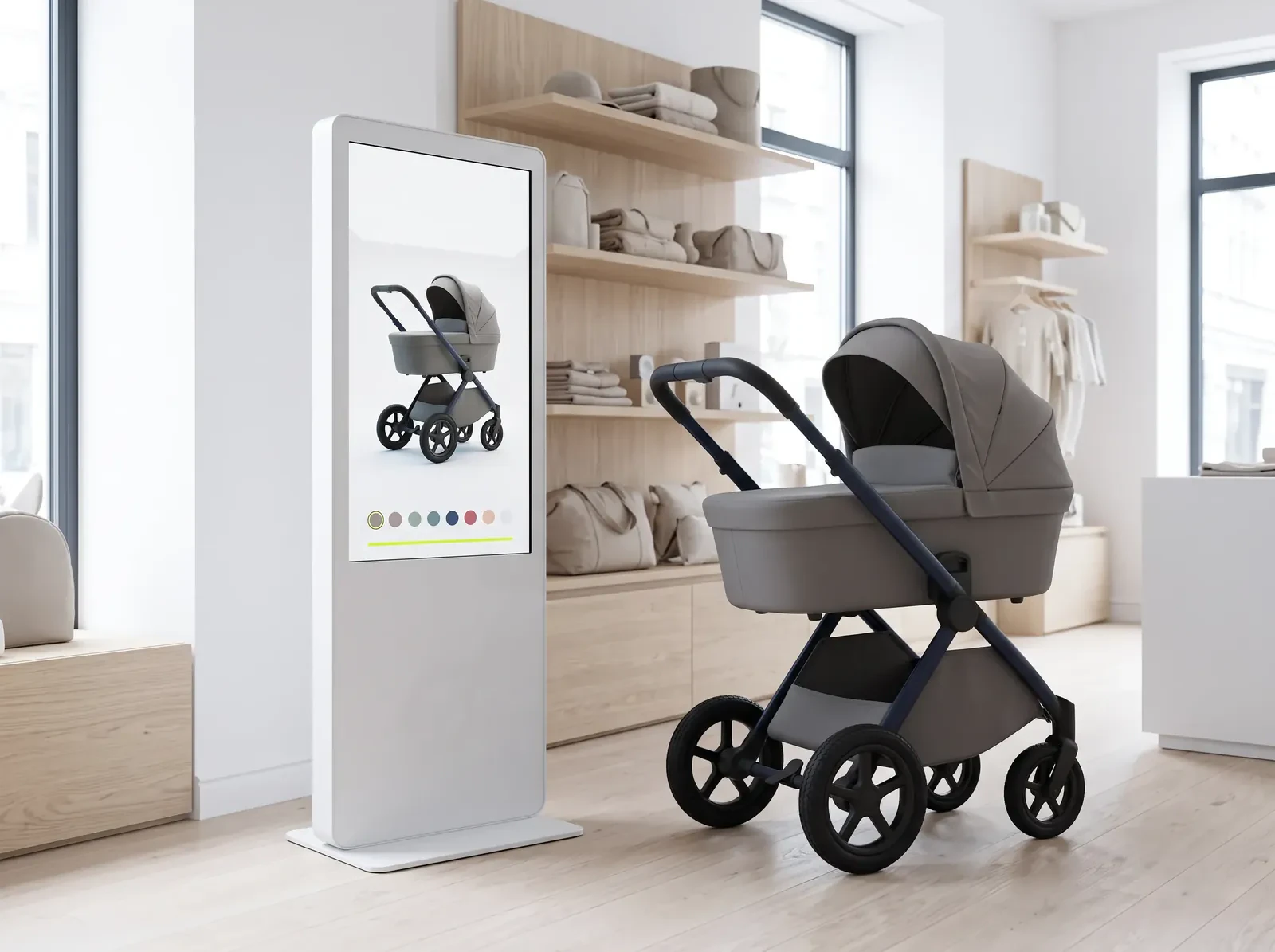
Floor space stops growing. Assortments don’t.
A family walks into a baby specialty store wanting “the stroller they saw online in blue with the tan leather handle”. The store has it in black. That stock-out moment becomes a lost sale: to a competitor, to a marketplace, or simply to no one.
Every variant on the shelf, even when it isn’t.
ARkid fixes this without asking for more square metres. The physical floor shows the best-sellers; the touchscreen shows the rest — every model, every colourway, every configuration — in the same walk-up moment.
The full catalogue lives on a tablet, a touchscreen or a printed tag, often with AR placement in the customer’s own home. The sale closes in-store even when the stock isn’t.
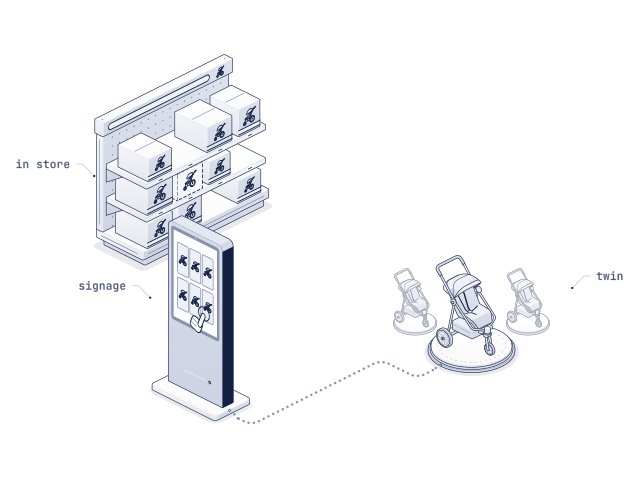
Six things that go on the shop floor.
The modules deploy independently or together, and everything runs in the web browser, with no app for staff or customers. Start with the tablets and screens the shop already has; wall-mounted touchscreens and branded shop-in-shop modules follow when they are justified.
- 01
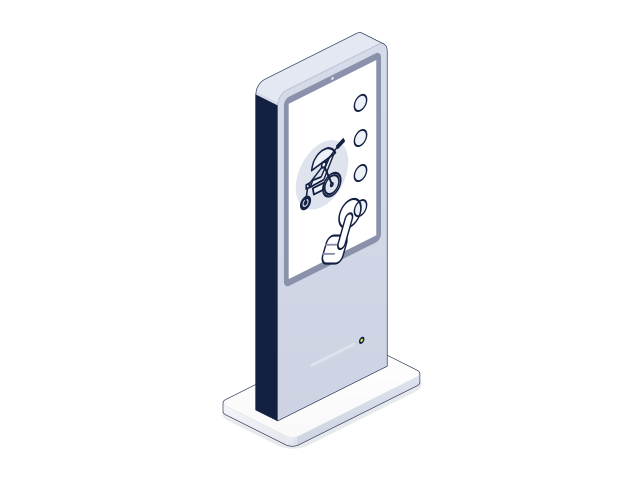
Touchscreen displays
Wall-mounted or free-standing touchscreens with the interactive 3D configurator. Customers explore on their own between conversations with staff.
- 02
Digital signage
360° turntables and lifestyle loops on in-store screens, programmable per time of day and refreshed centrally from the Catalogue. No on-site technician.
- 03
Sales View on tablet
A tablet interface built for the assisted sale: quick search, fast colour swaps and a one-tap AR handoff to the customer’s phone by QR code.
- 04
Shop-in-shop modules
Branded touchscreen modules for brand corners inside multi-brand retailers, pre-loaded with the brand’s full assortment and refreshed remotely when a new range ships.
- 05
QR codes on printables
Hang-tags, shelf talkers, stickers and posters from the printables designer. “Unlock all colours” tags solve the showroom-variant problem: the store shows one colour, the tag reveals the rest.
- 06
Window displays
Street-facing screens run configurators or signage loops. After closing time they become an always-on storefront: passers-by explore the products on their phones by QR.
Planning a shop-in-shop or a full POS footprint? The Rooms Configurator lays it out in 3D
Concrete store layouts, concrete answers.
Four illustrative set-ups that cover most of the decisions baby and juvenile retailers make. If yours isn’t among them, tell us about it.
- Scenario A
The small-format flagship
80 m² · single brand. The floor shows 4 strollers; the catalogue holds 14 models with 60+ variants. One 55-inch wall-mounted touchscreen, one staff tablet with Sales View and printable QR shelf talkers on every product.
Result: the entire range is presented without adding a single square metre of floor. - Scenario B
Multi-brand specialty retailer
400 m² · 40+ brands. Hundreds of products, and floor staff cannot know every brand in depth. Shop-in-shop touchscreen modules for the top brands, digital signage running a mix of brand campaigns, staff tablets for assisted sales and printable QR tags for self-service discovery.
The same retailer, online
Result: each brand’s full range is accessible, and staff focus where it matters most. - Scenario C
Inside a department store
150 m² · department store baby section. Limited staff, heavy weekend footfall, mostly self-directed shoppers. Wayfinding signage with a “scan to explore” call to action, self-service touchscreens at the section entrance and tablets on request from the service desk.
Result: browsing matches how department-store shoppers behave, while high-value purchases still get an assisted sale. - Scenario D
A Kind + Jugend booth
80 m² · trade-show booth. The brand wants to show 25 products; the booth fits 8. Two touchscreens running the configurator, one large screen with 360° turntable loops, QR takeaway cards for every product and one staff tablet for conversations with buyers.
Result: every buyer leaves with the full catalogue and a remembered experience, not just a business card.
The same modules, off the shop floor.
Kind + Jugend, Harrogate, Babykid Spain + FIMI, ABC Kids Expo: the category’s fairs are where brands and buyers meet. The modules that run a store run a booth, and the models customers see train the staff who sell them. See the fair calendar.
Booth content, and the models staff train on.
- Brand booth content. Touchscreen configurators, 360° loop signage and QR leave-behinds. Products still in development appear as interactive 3D, without physical prototypes on the booth.
- Catalogue handoff. Buyers scan a QR code and carry the brand’s full catalogue back to their office in 3D, not as a PDF nobody opens twice.
- Training. Distributors and new floor staff learn on the same 3D models customers see, at their own pace, with updates on the day they are released.
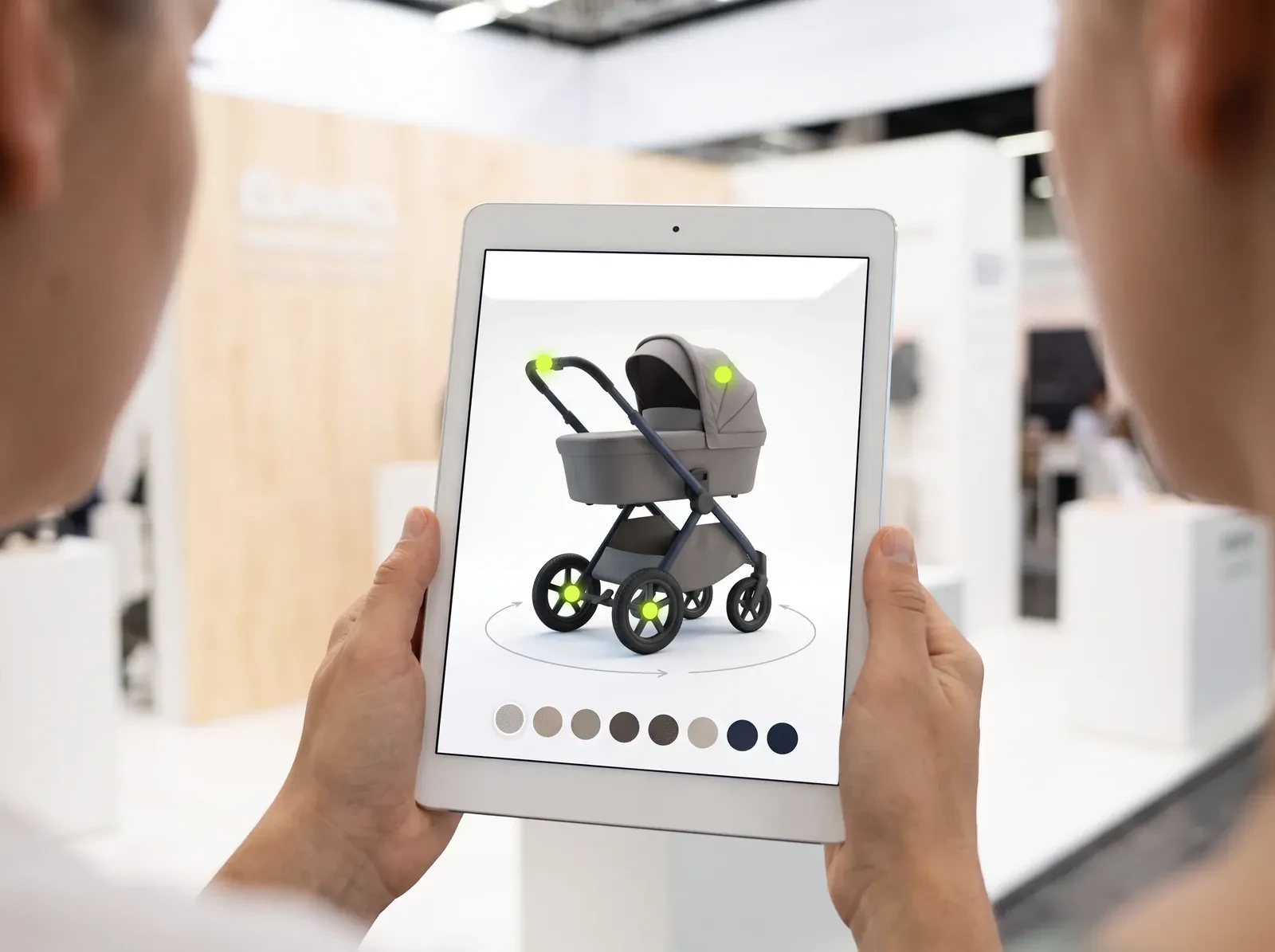
Sold today, and measured.
- 01
Products not in stock right now, sold today
The infinite aisle. When the floor doesn’t carry the colourway a family asked for, the touchscreen shows it, and the stock-out moment becomes a sale instead of a loss.
- 02
Track what customers actually explored
Physical retail has always had a measurement blind spot. The In-Store modules feed analytics back: which products got the most touchscreen interactions, which colours are configured most, which AR sessions led to store requests.
Signed off once. Current everywhere.
A week from decision to live.
Tell us your floor, your brands and your busiest day. We’ll size the In-Store modules to match.